GuilhemCarmouze
Final-year robotics engineering student at UPSSITECH, in Toulouse. Research intern at AIST, Japan, in 2026. I work on 3D Gaussian Splatting, 360° vision and robot navigation.
Open to 6-month end-of-studies internship, from March 2027. Robotics, 3D vision, autonomous navigation, robot perception, AI.
Scroll to move forwardSwipe up to move forward
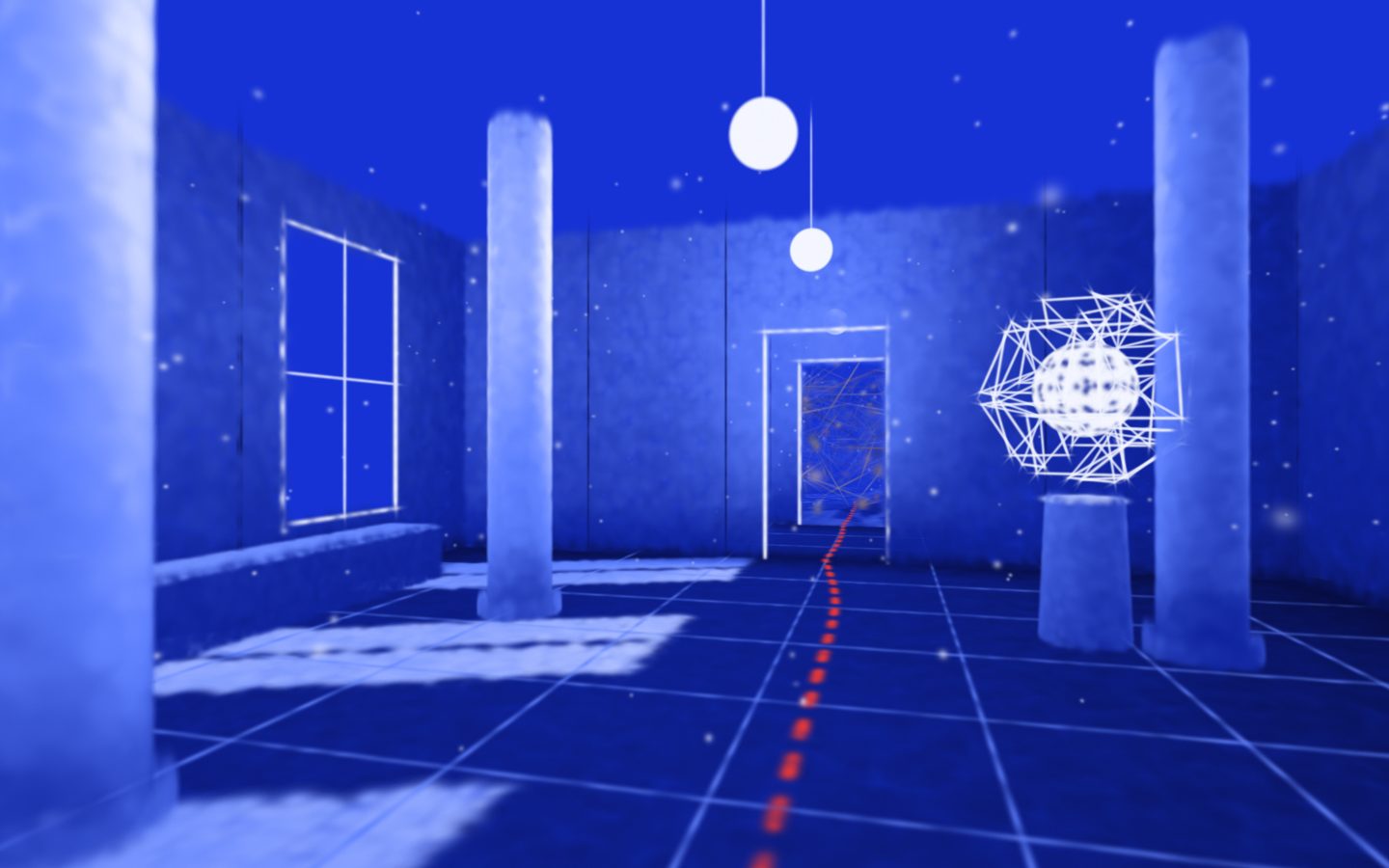
Research internship, AIST, Tsukuba, Japan. April to August 2026.
Creation of a 360-degree navigation dataset using 3D Gaussian Splatting
Computer Vision Research Team, Artificial Intelligence Research Center, AIST (National Institute of Advanced Industrial Science and Technology).
The source camera sees about 12% of the sphere per pose.
A visual navigation model needs 360° observations. A scene rebuilt from a plain video only holds what the camera saw: rendered as a full panorama, the rest comes out as floaters and needles.
ArtiFixer-360, my extension of NVIDIA’s ArtiFixer, repairs the views jointly with a video diffusion model and distils them back into the 3D scene.
The full 154-frame run failed my own acceptance gates, which led to a geometry-first redesign.
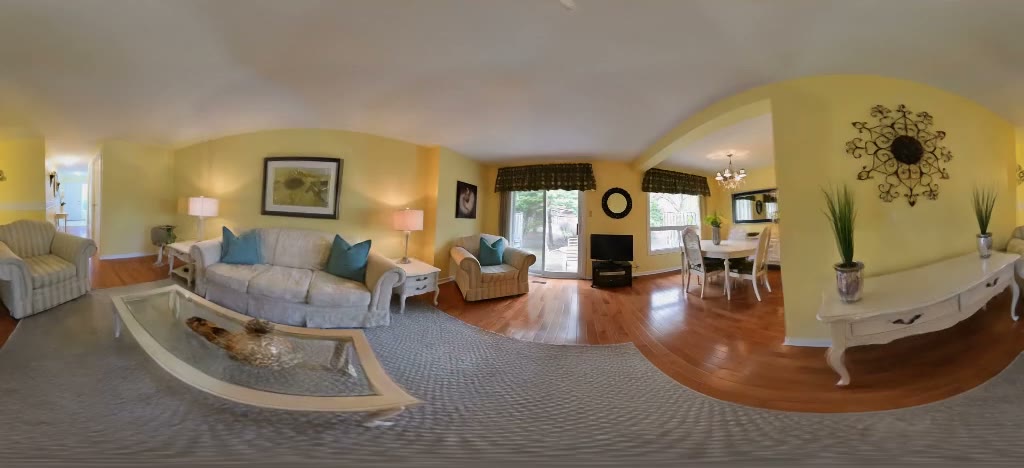 After ArtiFixer3D+
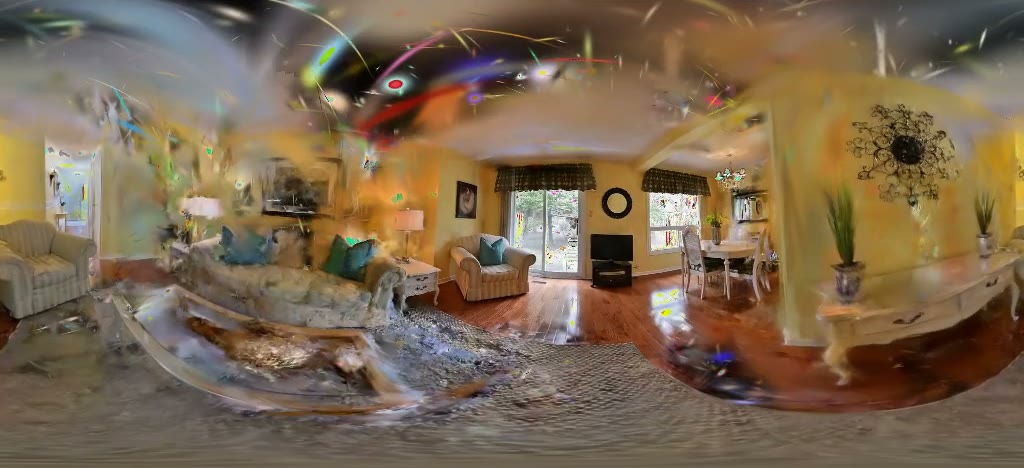 Raw 3DGRUT render
14
overlapping 110° views per pose, in a rig that follows the real camera path, repaired jointly by NVIDIA’s 14B video diffusion model.
−27%
cross-view depth error of the repaired views (MAE 0.0340 to 0.0247) with depth-aware synchronisation, before distillation. The gain did not clearly survive distillation.
SVLR
At AIST I also worked on SVLR (Scalable, Training-Free Visual Language Robotics, CNRS-AIST JRL), a modular pipeline that chains a vision-language model, zero-shot segmentation, a language model and sentence similarity to turn an instruction into robot actions without training.
TLSe Racing, Formula Student driverless team. 2025 to 2026.
The simulation layer of a driverless race car
My part is the simulation and tooling layer: a 2D Pygame simulator with a fit-to-track camera, a typed CSV cone-track loader, a car at Formula Student scale, and a configurable field-of-view sensor model that selects the visible cones.
Try the sensor model: set its range and opening angle, the cones it selects light up.
0 cones selected
The planners are my teammates’ work: one teammate wrote the midpoint centerline, the B-spline and the first reactive controller, another the RRT* planners and the smoothing.
I also worked on cone-detection models in PyTorch and on image-processing and control modules with ROS, Python and C++.
Final-year team project. 2026 to 2027. In progress
Usine 4.0
This year my class runs a team project on the Industry 4.0 smart factory (Usine 4.0), one of the sectors the SRI programme trains for. It is in progress: there is nothing to show yet.
The hall, its workstations and its mobile robots are an illustration generated in your browser, not project footage.
Projet Fil Rouge. First year of the engineering cycle, 2024 to 2025.
A real robot, driven from a web page
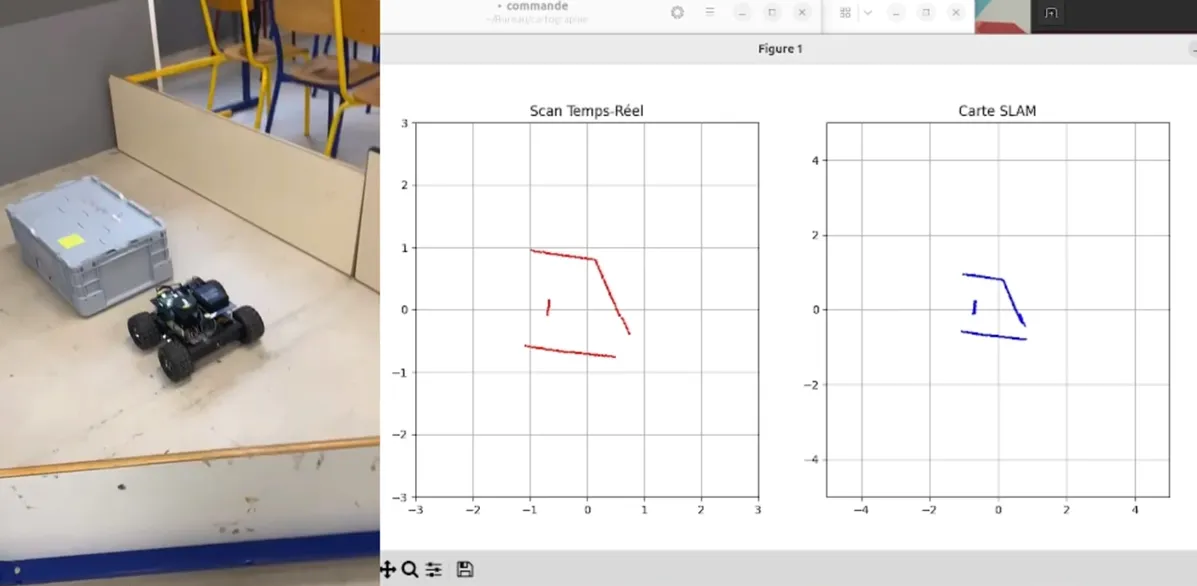
In a team of six we built a mobile robot: Arduino motor control, Raspberry Pi camera, LiDAR mapping, voice commands, ball tracking. My part was the web interface: a single-page app that drives the robot over the Web Bluetooth API (a page reload would drop the link), the live MJPEG camera stream, and the algorithm that turns the ball’s image coordinates into drive commands to keep it centred.
Mapping, voice recognition, motor control and image processing were done by my five teammates.
The semester before, with a classmate: a colour-ball detector in pure C11, no OpenCV.
Ball bearing +00.0°
Move the pointer over the pen: the ball follows it and the robot keeps it centred.
On the wall: Camera feed of the real robot with the tracked balls. Team demo recording.
Lab: side projects
Eight personal side projects that extend themes of the work above. Built in October 2026 with AI assistance; every number is reproduced by a script in its repository.
microsplat
3D Gaussian Splatting small enough to read in one sitting: a NumPy reference rasteriser, a differentiable PyTorch twin, and tests that pin every equation.
33.6dB
PSNR on held-out views of the ray-traced shapes scene after 3,000 iterations from random Gaussians, with adaptive density control (mean of 3 seeds).
splat-navmap
A study of when an occupancy grid sliced from a 3D Gaussian Splatting scene makes an A* planner drive through walls or refuse a doorway, on synthetic flats whose true geometry is known.
28.8→1.6%Paths that enter real geometry at an opacity threshold of 0.5, with moderate defects: centre counting, then footprint accumulation (1,000 start-goal pairs on 10 synthetic flats). The map with the lower IoU plans better (0.652 against 0.663). Centre counting is best at 0.3, where 1.8% collide but 4.9% of pairs become unreachable; the plateau above 0.5 follows from the defect magnitudes I chose.
amr-traffic-lab
A seeded simulation study of Industry 4.0 smart-factory (Usine 4.0) intralogistics: how many autonomous mobile robots a factory aisle can take before it jams, with the no-collision invariant checked on every tick.
0 / 600
one-hour runs gridlocked with the reservation manager, over three layouts. On the open floor it also delivers 24% more orders per hour than the naive manager with 16 robots (528.9 against 427.2).
visual-quality-gate
A training-free visual quality gate for an Industry 4.0 (Usine 4.0) line: PaDiM and PatchCore re-implemented in PyTorch, measured on five MVTec AD categories and judged on a line manager’s question: how many good parts do I refuse to stop how many defects?
10.5%
of good parts refused by PatchCore WR50-10% when its threshold, set from held-out good parts, aims at 5%: 43 of 408 over 3 seeds, 2.1 times the target, while 6.3% of defective parts (85 of 1,353) still get through.
Images: MVTec AD (Bergmann et al., CVPR 2019), CC BY-NC-SA 4.0, adapted (heat maps and captions added).
Also in the lab
erpkit
360° image geometry in NumPy: 96° feathered faces cut the seam step ratio from 5.6 to 1.06 under a ±5% exposure mismatch.
gaussian-projection-bench
Pinhole camera, 45° off-axis: the projection error passes half a pixel at a splat deviation of 18 px with EWA and 44 px with the unscented transform.
cone-ekf-slam
Cone tracks seen through a limited field of view: nearest-neighbour association picks a wrong cone in 17 of 50 runs at 4 m of sensor range, in 1 of 50 at 15 m.
usine40-cell-pipeline
A simulated cell through OPC UA, MQTT, PostgreSQL and Grafana: the stored OEE matches the event log when no sample is lost, and a 60 s broker outage at QoS 0 breaks 45 of 240 windows.
Project index
The run, without the run.
2026
AIST research internship
360° navigation data from 3D Gaussian Splatting: A* and panoramas in simulation, then a video-diffusion repair pipeline, reported with the run that failed.
Read the case studySee it in the runartifixer-360-pipelinenav_3dgs_panoKachakaNavigation
2025 to 2026
TLSe Racing driverless
The simulation and tooling layer of a Formula Student driverless team: 2D simulator, cone-track loader, field-of-view sensor model.
Read the case studySee it in the runTLSe_Racing_DriverlessPathPlanning
2024 to 2025
Projet Fil Rouge
A real mobile robot built by a team of six. My part: the Web Bluetooth interface, the camera stream and the ball-centring command.
2026 to 2027
Usine 4.0
Final-year team project on the Industry 4.0 smart factory (Usine 4.0). In progress.
2026
Lab: side projects
Eight personal side projects that extend themes of the work above. Built in October 2026 with AI assistance; every number is reproduced by a script in its repository.
End of run.
Looking for a 6-month end-of-studies internship starting March 2027. Robotics, 3D vision, autonomous navigation, robot perception, AI.
UPSSITECH, engineering school of the University of Toulouse. Robotic and Interactive Systems programme (SRI). Graduating June 2027.
Toulouse, France. French (native), English (professional), Spanish (basic).